
We help families build emotional intelligence together.
We offer Practical, research-informed programs that help parents, couples, and children develop the emotional skills needed for healthier relationships.
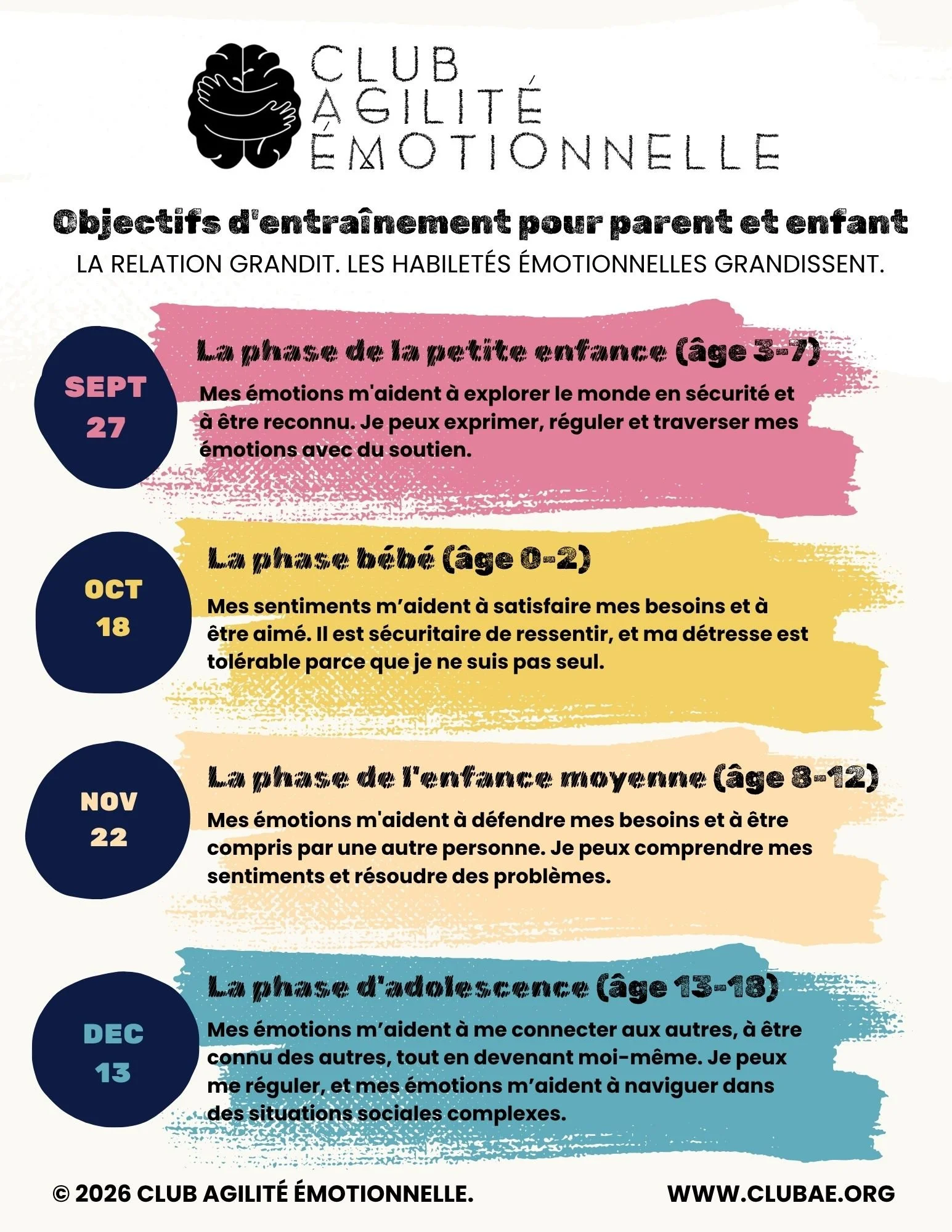
Featuring our second Parent and Child Relationship Workout Session (Ages 0-2)
October 18th 3:30pm-5:00pm
What is a Parent & Baby Relationship Workout?
Babies don’t learn emotional skills through reasoning, they experience them through their interactions with you.
From the very beginning, your baby is learning about emotions, safety, trust, and connection through the everyday small moments you share: the way you respond to their cries, notice their cues, comfort them, play and giggle together with them.
For babies and toddlers, emotional development begins with a secure bond with you. When we respond with warmth and consistency, we help babies gradually develop a sense of safety and begin to understand their own emotional experiences.
Through simple, playful, and developmentally appropriate activities, you and your baby will practice:
• Noticing and responding to your baby’s cues
• Building connection through eye contact, touch, and play
• Supporting your baby’s emotional regulation through co-regulation
• Exploring your baby’s emerging communication and emotions
• Creating moments of safety, trust, and shared joy through everyday interactions
The activities are designed to be simple enough to take home and incorporate into everyday family life.
Come slow down, connect, play, and grow together!
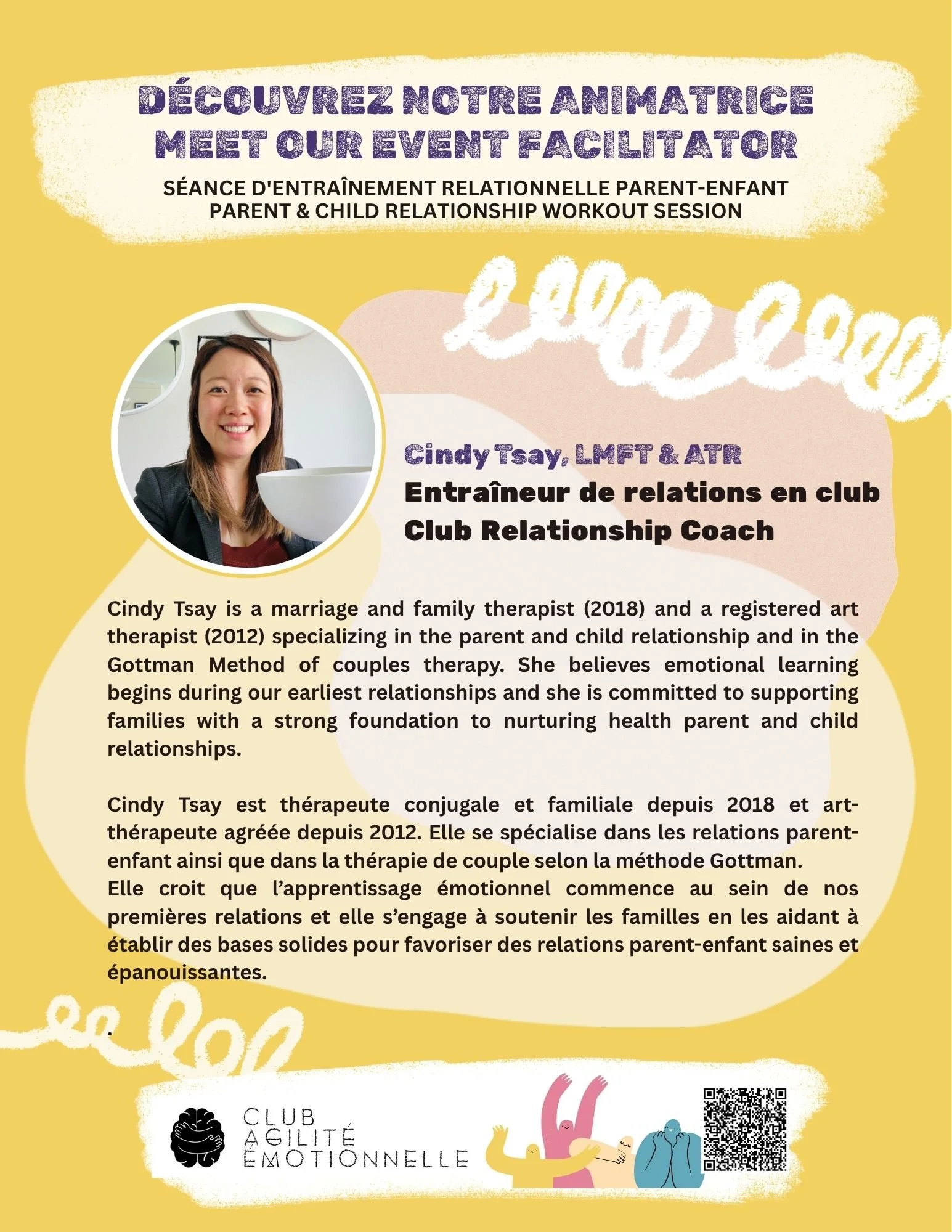
Featuring our first Parent and Child Relationship Workout Session (Ages 3-7)
September 29th, 2025 3:30pm-5:00pm
What is a Relationship Workout?
Children don’t learn emotional skills from lessons alone. They develop them through everyday moments with the people they trust.
For children ages 3–7, big emotions, frustration, boundary-testing, and learning to wait are all part of growing. These moments can feel chaotic, but they are also opportunities to practice important emotional skills.
Through playful, age-appropriate activities, you and your child will practice emotional skills such as:
• Recognizing and expressing emotions
• Managing frustration
• Waiting and taking turns
• Connecting through play
• Navigating emotions together
The activities are designed to be simple enough to take home and practice in everyday family life.
Come play, connect, learn, and grow with us!
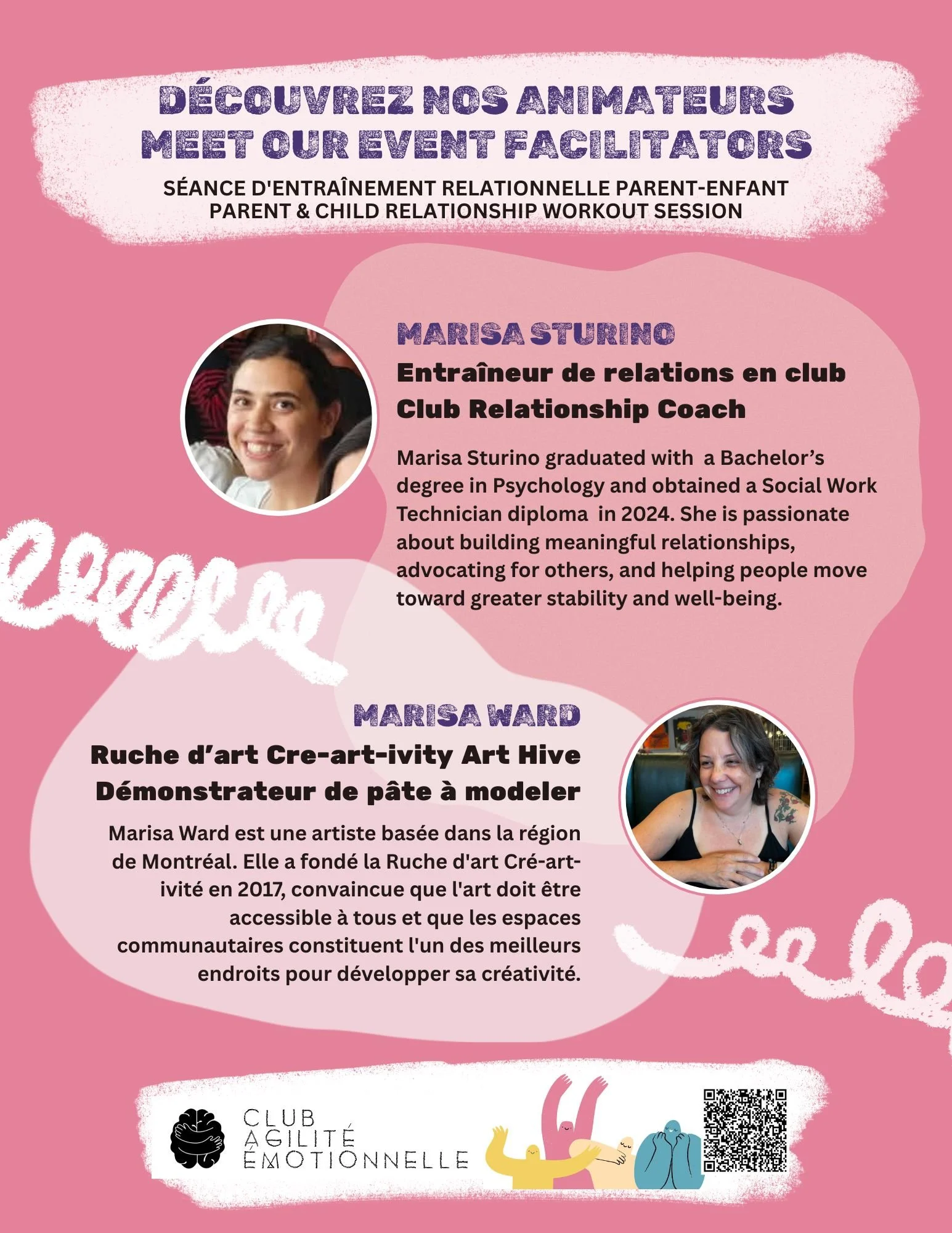
Come try out our relationship workout program this Fall to experience new ways to nurture emotional intelligence within the parent and child relationship.
Club Agilité Émotionnelle Events

About Us
Club Agilité Émotionnelle is a non-profit organization founded by a Marriage and Family Therapist and Art Therapist. We bring emotional learning into families and communities through accessible programs that support growing emotional intelligence in relationships.
After years of working with children, adults, couples, and families, we observe that many of the struggles people experience in relationships are not because they do not care enough or are not trying hard enough. More often, they simply have not had opportunities to learn about emotions, relationships, and how to navigate them.
We created Club Agilité Émotionnelle to make that learning more creative and accessible.
Through workshops, relationship exercises, and community-based programs, we help individuals, couples, parents, and families practice skills that support emotional awareness, communication, emotional regulation, and connection.
Why We Do This
Across Québec and Canada, more children, teens, and families are struggling with anxiety, depression, loneliness, conflict, and relational stress. At the same time, many adults are raising children without ever having received guidance themselves on how to manage difficult emotions, navigate conflict, or build healthy relationships.
Emotional intelligence is not something we are simply born with. It develops over time through relationships and experiences.
Children learn about emotions through the people who care for them. They learn what emotions mean, how to express them, how to regulate them, and what to do with them when life becomes difficult. When parents and caregivers are supported in developing these skills, it benefits the entire family.
Our hope is to make emotional learning more practical, more approachable, and more available beyond the therapy office so that families and communities have opportunities to grow together.
Organization Transparency
-
Club Agilité Émotionelle / Emotional Agility Club is a registered nonprofit in Quebec on April 3rd, 2025.
Registration number 1180781073
-
Board of Directors
President: Cindy Tsay
Vice President: Aaron Tsay
Administration: Timothy Tsay
Program Director: Cindy Tsay
Treasurer: Cheuk Man Lau
Secretary: Marisa Sturino
As a founding member and service provider of the organization, I will disclose any actual or potential conflicts of interest and recuse myself from decisions where personal, professional, or financial interests may influence my objectivity. - Cindy Tsay
-
Our work is supported by program fees, community partnerships, donors, and grant funding.
-
Donations directly fund the operation of the organization including the development of the programs, cost of the trainings, and subsidized program fees for community members.
Tax receipts are not issued at this moment
-
We operate on a community-supported pricing model.
Those who are able to contribute at the Sustainer rate help make programs accessible for families who may not otherwise afford them.We believe emotional resilience is a shared investment.
-
Refunds are available up to 7 days before the start of the program; after that time, fees are non-refundable except in exceptional circumstances.